Bottom line: Modern medicine can produce some miracles!

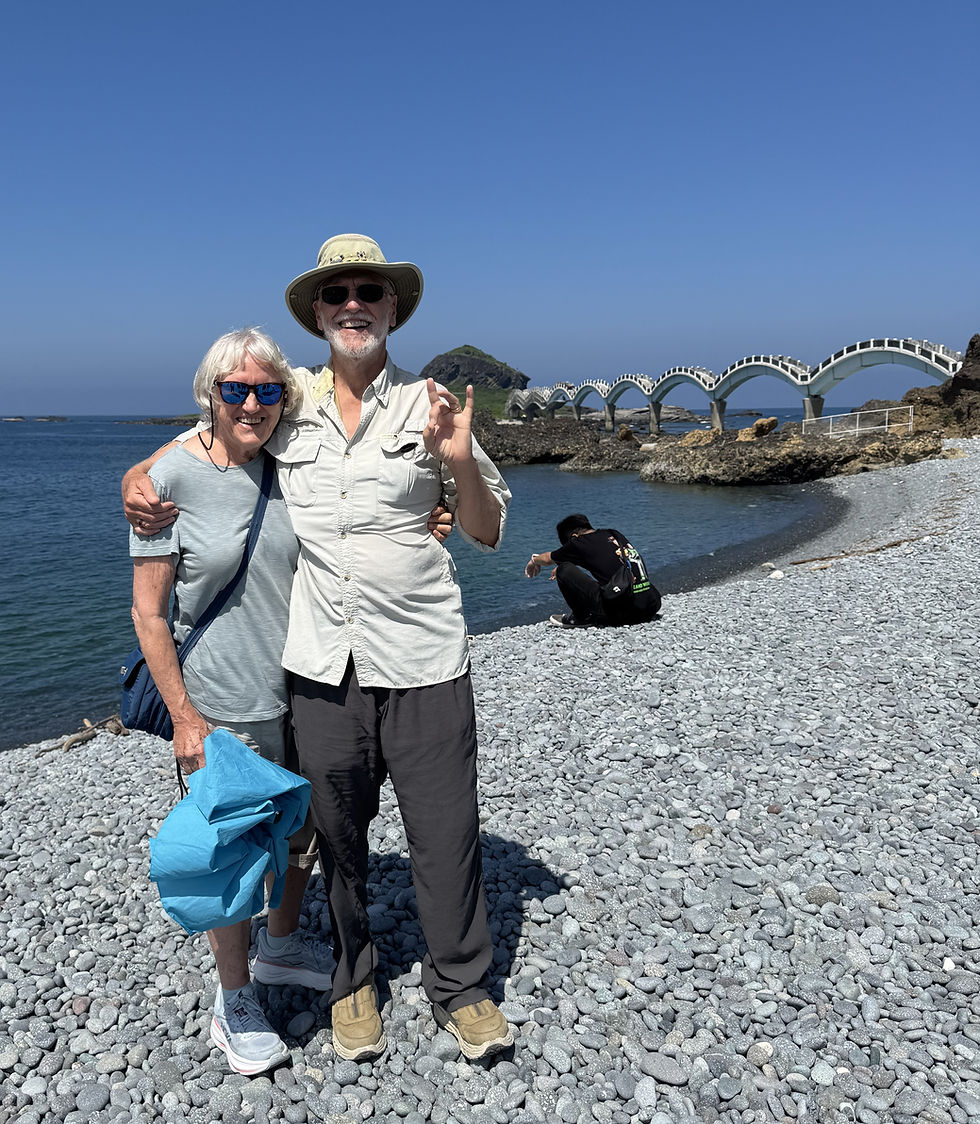
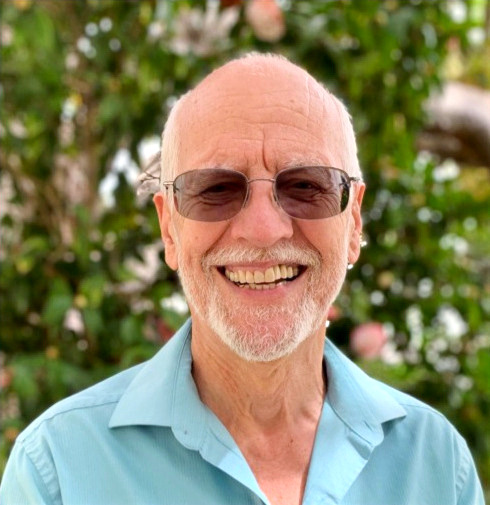
I pose at a distance
marker on the PCT.
8/22/26, Saturday (Day 0) - Prim8 and I accompany Wrongway in his RAV 4 to Morgan Hill, where we rendezvoused with Bob N. (Dr. Bobo), our driver/trail support buddy. From there, we continued to a motel in Red Bluff for the night, and hopefully a good rest, before the PCT hike adventure begins near Chester, CA.
Our plan: Dr. Bobo's would provide trail support by driving Wrongway's car. Thereby, we'd enjoy considerable flexibility and camping/meal options, alleviate the need for two sets of overnight gear and the necessity for two vehicles, while cutting down on driving time between trail junctions.
Note: I'll continue to use PCT Halfmile marker designations, though while hiking, I relied on on references from the FarOut cell phone app. Though they don't match, who should expect them to do so? Nothing in life is that simple!
9/23/26, Sunday (Day 1) (NOBO, AKA northbound) - We headed to the PCT trail junction near Chester (mm 1332.3) in anticipation of an early start. About halfway between the two, however, and as if on cue, a deer made an unwise decision...jumped, then paused immediately in front of us. Wrongway had precious little time to react.
BAM! The deer went down.
What?! Primate screamed.
"Came out of nowhere!" I said.
Stunned, we sat in Wrongway's RAV4, as we watched the deer kick and squirm it's way across the road to the opposite side within seconds.
"Mark, is your gun handy?" I asked, considering we should relief a suffering deer of it's misery.
Moments later, the deer rose to it's feet, and began walking towards the rear of the vehicle. I imagined it had an expression of indignation. We were as stunned at that development as we were of the deer's appearance, and our subsequent collision with it.
I turned to face ahead again. "I'm surprised it didn't die immediately," I said.
"Yeah, me, too," Wrongway said.
"The deer hopped the guardrail and disappeared," Dr. Bobo reported.
We checked for damage to the car, and discovered a red fluid leak.
What part of the engine had been damaged?
We questioned, speculated, examined, before continuing on briefly to a flat spot and turnout on the road near buildings on both sides.
"The engine is overheated," Wrongway explained.
Luckily, Wrongway had cell service and called for an emergency tow, which transported us to the nearest RAV4 dealer in Redding, 60 miles away. The dealership repair department wasn't open on Sunday and who knew what needed to be repaired or how long it would take to make the RAV4 drivable?
Wrongway pondered our options. Several hours later, after some consultation with his insurance company, he rented a similar vehicle, and we were headed back to the PCT/Chester junction, our intended starting point.

Dr. Bobo poses aside our rental
vehicle at the PCT/Chester junction.
Beginning our hike early afternoon, under high overcast and in cool temperature, I took the lead, eager to discover if my new Cortisone knee injection would alleviate the agony I'd endured during my last hiking trip.
Our day's objective? PCT mm 1343.1, a day's hike of 10.3 miles, quite ease by PCT hiker standards. The trail started gently, and covered with pumice and dust, led us through a burned section of forest. (See previous photo of the trailhead junction.) Wrongway, wearing shorts, soon realized his choice to be less than ideal, as we pushed our way through waist-high brush bristling with thorns.
"Tomorrow, I'm wearing long pants," he quipped.
Prim8 wasn't complaining, however.
Got nothing to gripe about, dude? How novel! I thought. Fingers crossed, fellow. Left knee doing good. I knew, however, that Prim8 would eventually find something about which to complain...just not sure what and when.
We marched past occasional shaded spots, which grew in frequency as the trail gained elevation. A slight breeze cooled us, and the temperature hovered in the low-80s. The arm stockings, which I'd decided to wear, blocked the sun's rays from my arms and prevented sunburn.
We progressed steadily, then later rendezvoused with Dr. Bobo at 6:50PM (mm 1343.1), before car camping near the trail junction, where a sign claimed the halfway point.

This unofficial sign claims to be at
the PCT halfway point. (My best
guess about 20 miles north of
the official concrete marker.)
8/24/26, Monday (Day 2) (NOBO) - Old Red Bluff Road junction (mm 1343.1) to Chester Warner Valley Road junction (mm 1351.7)
The rental car reloaded with our gear while the temperature hovered the low 50s, before we drove to Chester for breakfast, and cell service so that Wrongway could to attend to car repair issues.
How civilized, Prim8. I'm afraid you'll get spoiled.
Verdict on the RAV4 repairs? It would be several days before parts could be obtained and installed.
We returned to the trailhead (mm 1343.1) where at noon and in pleasant weather, Wrongway, Prim8 and I began our day's hike to Chester Warner Valley Road junction, 8.6 miles away.
Hurt! Prim8 complained of my aching feet in short order.
This is nothing compared to the knee pain during our last hike, Prim8. We'll take care of this later. Then, I noticed pain developing in my left hip area and right ankle, which Prim8 didn't, and wouldn't, overlook. (I'd brought a knee brace, Advil and Bengay, which I hoped would be sufficient to handle any pains that I'd encounter.)
Around mm 1344, we entered Lassen National Park.
We encountered waist-high brush again today and a thick layer of powdery dust blanketed the trail, particularly over the last mile.
Wrongway and I smelled Boiling Spring Lake before we spotted it aside the trail.
"Smells like something burning," Wrongway said.
Stink! Prim8 quipped.
"Kind of like sulfur," I replied.
"Wouldn't want to drink it," Wrongway said, once we eyed the offender.
"Nope, not even if boiled and filtered," I said.

Boiling Spring Lake in Lassen
National Park (mm 1345).
Dr. Bobo awaited our 5PM arrival at the road junction near where we would camp at Warner Valley Campground.
8/25/26, Tuesday, (Day 3) (NOBO) - Chester Warner Valley Road (mm 1351.7) to West Prospect Lookout Road (mm 1364.8)
My 6AM phone alarm set us in motion. I noted a thin, high overcast.
Wrongway reported, "It's 47 degrees."
We left Dr. Bobo and the rental VW at 7:10AM in the cool, calm air as sunrise spread it's colors across the sky.
Soon after, Prim8 kvetched about various pains in my feet.
There's must be a problem with our boots...but, hey, our left knee is doing great! I regretted not buying boots with a wider toe box.
The clouds above filtered the worst of the sun's rays, while my large-brimmed hat and arm sleeves blocked more of it. Meanwhile, the trail remained relatively flat, comprised of small pumice, while a moderate breeze cooled us.
We veered away from the trail at Badger Flat Spring Trail junction for a gentle, cross-country bushwhack to meet Dr. Bobo, who approached on the gravel road 10 minutes later.
We drove to and spent the night at Big Pine Campground, a great campsite, where I had a cozy night's sleep despite the chilled air.
8/26/26, Wednesday (Day 4) (NOBO) - Badger Flat Spring Trail junction (mm 1364.8) to West Prospect Lookout Road (mm 1371.2)
We broke camp starting at 6AM, returned to our rendezvous point of the day before, and started our hike at 7:10AM.
We hiked without difficulty, and along the way, I spotted a deer and non-poisonous snake.
Snake! Prim8 sounded his alarm.
Two long yellow stripes alternated with black along it's length. Don't worry, it's not poisonous, guy.

Lassen Peak.
At mm 1366.5, we passed a sign, which indicated that we were exiting the national park.
We met with Dr. Bobo at our designated spot at 10:15AM. Then, Wrongway attended to his wounded RAV4 in Redding. After a drive to access cell service, he returned to the campground with news that his car was ready for pickup. Options weighed, I accompanied him to Redding to reacquire his vehicle and drop off the rental VW. On our return, we bought a pizza in Burneyand devoured it at our campsite...along with chilled beers.
Wrongway suggested additional revisions in our hike to help maintain our overall schedule. "Let's drive up to the Grizzly Peak area and hike those sections NOBO, but moving to the next section south each day. That would leave us closer (less driving distance) to the section between Chester and Sierra City." (We had an unfinished 15-mile section along that segment which we desired to complete, also.)
Dr. Bob and I were all in.
8/27/26, Thursday (Day5) (NOBO) - Alder Creek Trail junction (mm 1462.1) to the junction with unpaved road 38N53 (mm 1475.2), near Fitzhugh Gulch Creek and the McCloud River.
Up at 6AM, again, in 40-degree air, we packed up, drove as closely as we could (impeded by a locked gate) to Alder Creek Trail junction with the PCT. From there, Wrongway and I worked our way along gravel/dirt road for ~1.5 miles to reach the PCT at 11:30AM, then headed NOBO (northbound) toward our day's destination.
With no intention of spending a night on the trail, and, thus, the approach of nightfall uppermost in our minds, Wrongway and I kept moving as the day progressed.
We can do this, Prim8, if our left knee holds out.
Wrongway and I took a well-deserved lunch about midpoint, then continued on. Prim8, continuously occupied, complained about increasing fatigue and foot pain as I trudged onward mile after mile, on what seemed an eternal downhill grade.
The air humid, and warming, as we lost elevation, I noticed an increase in blood-sucking insects buzzing about and poison oak growing aside the trail.
Careful, Prim8 warned.
Having suffered poison ivy as a child in Kentucky, I've learned to identify the west coast equivalent and am leery of brushing against it. Oh, I'll keep an eye out, dude. And I'm guessing that wherever you find poison oak, mosquitoes won't be far away...and vice versa.
As dusk began to overtake us, Wrongway and I reached our rendezvous point with Dr. Bobo.
"You kicked butt," Wrongway mused, and handed me a cold brewski.
"I thought I could, I thought I could," I replied, surprised that my left knee felt good for a change! Oh, the miracles of modern medicine, Prim8. I alternated between taking a swig of ice cold beer and rubbing the can across my forehead.
We spent the night in a dusty campground. Inches thick, powdery, tan-colored dust, disturbed by the slightest movement, swirled and floated about, before settling on everything.
"You can see the dust in the car headlights," Dr. Bobo noted.
"Yeah. I just wonder how much of that stuff we're inhaling," I said. I noticed that it acted like a stain when I attempted to brush it off my clothing. It just wouldn't come off.
I heard animals bawling in the night, and, soon after, something running down the paved road nearby. I envisioned wild animal(s) rushing headlong through our campsite.
What?! Prim8 blurted. Get run over?
Sounds like a spastic moose, guy. Fortunately, Prim8 and I were spared a stampede.
8/28/26, Friday (Day 6) (SOBO, AKA southbound) - Alder Creek Trail junction (mm 1462.1) to unpaved road junction, 39N10, near Bartle Gap (mm 1447.6)
At 7AM, we arose to clear sky with a cool temperature, and as we broke camp, we talked about the ruckus during the night.
"What caused that noise last night? I thought it was a moose," I said.
"Not around here," Wrongway said. "I looked out and saw several cows, which ran down the road."
Spastic cows, Prim8. "Well, that explains it," I replied.
As we left Dr. Bobo at the car at 9:45AM, he said, "Every step today equals two from yesterday."
Hmm. Though I knew that was intended as an encouragement, I had difficulty adopting that viewpoint as my feet ached.
As expected, Prim8 wailed constantly.
I downed two Advil. That should help, Prim8. Then, I repeated Dr. Bobo's encouraging words like a mantra.
We made steady progress until, at 2:55PM, we met Dr. Bobo who awaited our arrival. From there, we claimed a spot at Dusty Campground near Lake Britton, then headed to Burney for a pizza...and beer.
At camp that evening, I inventoried my feet: blisters under two pinky toes on my right foot; blister aside my left big toe; two sores atop my left foot; and sores on my left pinky. Clearly, my boots weren't doing me any favors. An ample application of medical tape over every blister and sore would have to do...aside from Advil, as needed.
Additionally, in anticipation of rain per the forecast, Wrongway and Dr. Bobo erected their tent rain flies. I used one ground cloth as a makeshift cover over my Bughut, prepared to abandon my ship and take refuge in one of the RAV4's seats. (That vehicle was crammed with our gear, and Dr. Bobo had been resting a small container on his lap most often.)
A drop, or two, of precip may have fallen during the night, though I detected nothing.
8/29/26, Saturday (Day 7) (SOBO) - Bartle Gap area (mm 1447.6) to unpaved road near Peavine Creek (mm 1443.3)
Up at 6AM, my feet and right knee ached, and Prim8 complained.
I'll take two Advil before we start, fella.
In a cool temperature and under clear sky, Wrong-way and I started our day's 13-mile hike at 8:10AM.
The weather remained good and a breeze helped stifle my sweating. Several miles along, we were pushing through overgrown brush/small trees, later we encountered an unobstructed trail amidst an open conifer forest.
A previous back pain returned, an on-going, niggling ache about which Prim8 gave me constant grief.
We'll take Advil, fella. Advil! That's about all we can do. A result of the scoliosis a doc recently diagnosed? Or my day pack without a waist strap? Of course, I didn't have the answer. Perhaps, all of the above. Regardless, I concluded that I had to push on.
Wrongway and I met Dr. Bobo at 3:10PM and proceeded to Butch Dyke Memorial Deer Camp for the night. (Don't ask me if that was someone's actual name...or some sick, perverted joke. I have no idea. A google search has yielded nil, nada, zilch.)
The night air was cold, and I needed the addition of my fleece sleeping bag to keep my feet warm.
8/30/26, Sunday (Day 8) (SOBO)- Peavine Creek area (mm 1443.3) to Britton Lake Dam (mm 1421.8)
Wrongway and I started our hike at 8:20AM, with an ingenious plan to meet Dr. Bobo at unpaved road junction (38N05) after about an 8-mile jaunt. We arrived there at 11:30AM. We rested and ate sandwiches before continuing the remaining 5 miles, or so, to Britton Lake Dam. The sun bore down on us and the temperature was decidedly hotter at 1:45PM, when we reached Dr. Bobo.
Time for a sight-seeing side trip, we visited Burney Falls (photo above), then drove to Burney (the town) for food supplies, ice, more pizza...and beer.
A spot procured in Cave Campground, we set up for the night. Then, Dr. Bobo and I took advantage of the proximity and toured the Subway Cave, a lava tube about one-third-mile in length.

The entrance to the
Subway Cave lava tube.
(Take a flashlight!)
8/31/27, Monday (Day 9) (NOBO) - Mud Lake trailhead (mm 1381.8) to Road 22 (AKA Bidwell) junction (mm 1395.1)
Up at 7AM, we proceeded to the trailhead with another plan to break our day's hike into two smaller segments. The air hazy, with smoke we surmised, all but obliterated a view of Lassen some 39 miles distance. With cell connection and a check of an app, we concluded that several fires in Oregon and the wind direction were likely to blame for the reduced visibility.
I couldn't decide if I smelled smoke, though imagined I did occasionally.
At 8:40AM, we began our hike. The trail ran mostly level and twisting, roughly parallel to the ridge, traversing through chaparral initially, then transitioning to ponderosa.
The full sun, only partially filtered by the haze, beat down upon us. Thankfully, a light-moderate breeze helped keep us cool.
We passed a large water cache, which I guessed to be comprised of fifty one-gallon jugs of water, and with a sign requesting not to post it's location.
Dr. Bobo awaited us at the designated interim meeting point, a dirt/gravel road junction (34N94) (mm 1389.0), where Wrongway and I snacked and rested before continuing on at 12:4PM.
We rested on a wooden bench aside a radio/microwave tower, and enjoyed a hardy chuckle about the letters RIP, which had been carved into the backrest.
Apropos, Prim8?! Though I hoped not so in the more common sense.
My feet ached; Prim8 wailed.
We finished our day's trek at 3:30PM, drove to Old Station, where we obtained the necessary coins to pay for showers.
Not hot! Prim8 demanded.
You got it, buddy. Lukewarm, then cool. After my scrub down, I checked my feet to discover another blister on my left big toe. What do I need to do to prevent this? I concluded that a new pair of boots may be in the offing.
We drove to Burney for another pizza...and beer, then camped at Honne Campground.
9/1/26, Tuesday (Day 10) (NOBO)- Road 22 junction (mm 1395.1) to Baum Lake Road (mm 1408.4)
With more opportunities to meet Dr. Bobo at several interim spots along the way, we began hiking at 8:35AM.
The cooler air, and my arm stockings, helped offset the heat from a relentless sun in a cloudless and much clearer sky.
Our hike went smoothly, aside from Prim8 nagging me about my aching feet.
11:45AM, after an ~7-mile jaunt, we came upon Dr. Bobo at the dirt/gravel road junction (36N07A).
I took opportunity to down an Advil. That should help, Prim8.
Following a snack and rest, we continued. A strong breeze cooled us, and reduced our need to consume water.
Once we'd rendezvoused with Dr. Bobo, we headed to nearby Baum Lake to watch the numerous species of birds resting and feeding there. By chance, a muskrat existed his lair on a mission to collect what appeared to be a twig before returning to it.
Tiny, Prim8 marveled.
A rare treat, Prim8. I'd never seen one up close.
As if by habit, we headed to Burney for pizza...and beer, then, motored to Cassel Campground.
A weather check suggested 1/10-1/4 inches of rain around 2AM, so we battened the hatches with rain flies, a tarp in my case. I steeled myself for a dash to the car, in the event of strong wind scuttling my engineering arrangement.
9/2/26 Wednesday (Day 11) (NOBO) - Baum Lake Road (mm 1408.4) to Britton Lake Dam (mm 1421.8)
I'd heard a few drops of rain through the night, and the ground appeared only slightly affected when we arose at 6AM.
Under an overcast sky, and in the 58-degree air, according to Wrongway, we prepared for our day's hike...to be broken into three segments by meeting Dr. Bobo twice along the way. That plan struck me as sacrilegious for PCT hiking, but what the hay? I took an Advil as precaution against aches/pains.
We left Dr. Bobo at 7:35AM for our first segment, meeting him again at 9:30AM.
Twenty minutes later, we were on our way again. I downed another Advil to dampen my left leg shin pain. To my surprise, my left knee continued to be pain free. We marched on steadily, remaining cool under an overcast of clouds, which threatened rain.
At 12:13PM, we again met Dr. Bobo (our second rendezvous of the day).
Continuing on at 12:50PM, and despite my level-4 shin pain, we finished our day's hike of 13.1 miles, ending at Britton Lake Dam at 13:49PM without encountering rain.
Once in Wrongway's RAV4, small water droplets moistened it's windshield.
"Perfect timing," I observed.
We headed to Old Station, angling for another pizza, if possible. One pie acquired, we drove to Big Pine Campground, where we consumed it along with cold beer.
In the cool air and under an overcast sky, we again anticipated rain during the night. With appropriate preparations completed, i.e., rain flies and trap deployed respectively, we settled in.
I'd lucked out so far, but wondered if my fate would take a turn for the worse. However, though I heard sprinkles at times during the night, everything remained favorable to my staying warm and dry.
9/3/26, Thursday (Day 12) (NOBO and SOBO) - Unpaved West Prospect Overlook Road (mm 1371.2) to dirt/gravel road junction near Highway 44 (mm 1378.3), then Mud Lake junction (mm 1381.8) to Mud Lake trail junction (mm 1381.8) to Highway 44 (mm 1378.3).
Arising at 6AM, we packed gear as light rain coated every exposed surface.
Spared once again, Prim8!
Wrongway and I marched off at 7:01AM, then met Dr. Bobo at the road junction (mm 1378) at 10AM. Then, we drove to the Hat Creek Lookout (mm 1381.5). A moderate, cold breeze blew steadily as Wrongway and I headed southbound and off the ridge toward the valley floor at 10:25AM.

The dismal aftermath of a
wildfire in Hat Creek Valley.
Note the regrowth occurring.
The rain steadily increased, though not enough to drench us, while the wind remained civil.
Though rocks littered a good portion of the trail, and I remained vigilant not to stumble, we moved steadily and achieved our objective by reaching Dr. Bobo at the dirt/gravel road junction near Hwy 44 by 11:55AM.
Celebratory beers all around, we toasted our successful sectional hike from near Chester to McCloud, covering ~143 miles. However, Wrongway and I had to attend to one more detail, a previously uncompleted 15-mile segment between Chester and Sierra City. So...we headed southward to Quincy, CA, with intent to do just that!
We spent the night in a Quincy motel, about which Prim8 reveled.
9/4/26, Friday (Day 13) (SOBO) - Paved Quincy-LaPorte Road, gravel parking area (mm 1236.5) to unpaved road junction near A Tree spring (mm 1221.0)
Following a 4:30AM wake-up, then a 90 minute drive to our starting point, Wrongway and I bundled up in rain gear for the sporadic episodes of light rain and a strong gusting wind. In accord with a weather forecast of rain ending around noon, we started southbound at 6:30AM.
Bundled up to stay dry and warm, I broke into a sweat within the hour. Crap, Prim8! I declined to pause to remove gear. Who knew what rain we would still encounter?
Light rain continued sporadically, and often fell in large drops from the trees that lined the path. My back ached for which Prim8 voiced his displeasure, so I consumed two Advil. Meanwhile, I grew wetter, and at some point, realized that my water proof coat and pants
were failing me...but onward I trekked.
We'll be done when we complete this stretch, fella! That didn't quiet Prim8, though.
Drops of water continued to strike us. Cold wind continued to blow. Our body core was warm while we were moving, however.
We encountered a camouflaged bow hunter, who stated that he abandoned his day's plans due to strong, cold wind at the exposed ridge ahead.
No! Prim8 wailed.
We'll just need to keep moving, dude. As long as we are warm enough, we'll be okay. Well, "warm enough" were the salient words! My hands, face, and feet were chilled to the bone. It crossed my mind that frostbite may result, at least in my toes, which squished water with every step.
Indeed, the wind blew hard along the ridge trail. But I continued to move forward, soaked, achy, fatigued and miserable.
About halfway along, Wrongway and I paused for 10-15 minutes to replenish our energy. I downed two Advil. Wrongway offered to loan me his rain jacket, but I declined. At some point, he noted that the lowest temperature for the day had been 40 degrees.
"As long as I keep moving, and the wind doesn't blow a gale, I'll stay warm and be okay," I said, fingers crossed.
I worked to keep pace, despite my fatigue, miserable condition and continued back pain, generally zigzagging down the trail like a drunken sailor. Wrongway commented that he'd noticed me staggering and hunching over, which I couldn't dispute.
We continued on, me going as fast as I could manage.
Several miles on, Wrongway offered to carry my back. "I've got the energy, and want to finish our hike as soon as we can," he said.
I was in no condition to argue his point, so relented. He'd made a good point. I was slowing our combined progress.
Though time dragged on as I plodded down the trail, we reached the RAV4 and Dr. Bobo at 2:50PM.
Feeling like a soggy dishrag, and Prim8 eager to warm up inside the RAV4, I told Wrongway and Dr. Bobo, "Well, THAT (emphasis added)...was a miserable fifteen miles."
Once again, however, congratulations were in order. Finally, Wrongway and I had completed a previously missed segment, and now had hiked the PCT from near Sierra City (mm 1191.6) to Etna Summit (mm 1581.0), a total of 390.4 miles...or thereabouts.
We drove to Sierra City...had to...in order to introduce Dr. Bobo to Sorracco's Saloon, and where I could indulge another Kentucky Tangerine Cream Ale (beer).
Prim8 was beside himself with anticipation.
And alas, we consumed cold brews at Soccarro's. Me? I relished a Kentucky Tangerine Cream Ale, and then a Kentucky Vanilla Barrel Ale, while Prim8 went to hog heaven. Afterward, we spent the night at the Old Sierra City Hotel.
9/5/26, Saturday - We drove to Morgan Hill, dropped Dr. Bobo at his car, exchanged our farewells, then Wrongway and I headed to Gilroy to spend the night before our return home on Sunday.
Previous lesson learned, I've scheduled a left knee replacement. As well, I've acquired a new rain jacket and pants, and will contemplate purchasing new boots!
Miracle of miracles, the cortisone injection had eliminated my knee pain. And, two sections of the PCT completed (Mexico to Cottonwood Pass, and Sierra City to Etna Summit), Wrongway and I have hiked roughly 1,139 miles of the PCT. Though not quite half of it's total length, we've made a good showing...so far. Fingers crossed!
Walk in beauty.